

Electronic Logging Device (ELD): Fleet Compliance Guide
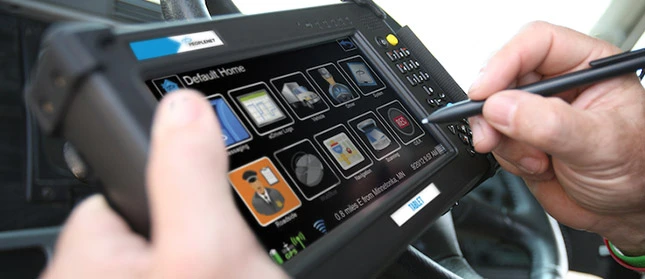
An electronic logging device is hardware that connects to a vehicle's engine and automatically records the driver's duty status — driving, on duty but not driving, off duty, or resting in the sleeper berth. Because the device reads engine and motion data directly, the log reflects what the vehicle actually did, not what someone wrote down at the end of a long day. Unlike paper logs, ELD records are tamper-resistant, synchronized to a common clock, and formatted to a standard that roadside inspectors can read on the spot.
Each device captures the core fields regulators require: driver ID, vehicle and trailer numbers, GPS location, odometer readings, engine hours, and every change in duty status. Those records flow to a secure back-office platform where managers and auditors can review them, annotate edits with documented reasons, and retain them for the legally required period.
Modern ELD platforms go well beyond the legal minimum. They connect to routing and dispatch systems so planners can see hours remaining at the moment they assign work, and they raise predictive alerts when a plan is likely to exceed legal limits. In-cab screens show drivers a countdown to their next required break or the end of their shift, so they can manage their own day instead of being surprised by it. Mature systems also handle the edge cases — yard moves, personal use of the vehicle (personal conveyance), drive time no one has claimed, team driving, and short-haul exemptions — without burying anyone in false alarms. A well-designed driver app makes status changes a single tap, prompts for required remarks, and includes an inspection mode that gets a roadside check done quickly and consistently.
Why It Matter In Fleet Operations
Hours-of-service rules exist because tired drivers crash. An ELD makes those limits real in the moment — not just on paper after the fact — and that protects drivers, the public, and the business at the same time.
Safety
Duty limits enforced in real time mean fewer drivers pushed past the point of safe alertness. The countdown on the in-cab screen turns an abstract regulation into a concrete decision aid.
Compliance and audit readiness
Clean, consistent records with an unchangeable edit history reduce the chance of fines and out-of-service orders, and they compress audit preparation from days of paperwork into a review of records that were correct when they were created.
Better dispatch decisions
Real-time visibility into hours remaining lets dispatchers assign work to drivers who can legally finish it, avoid late-day surprises, and protect delivery commitments to customers.
Business leverage
Accurate duty data feeds driver scorecards, sharpens route planning, and strengthens insurer relationships — a documented, functioning safety program is evidence that carries weight when premiums are negotiated and claims are disputed.
Example in practice
A regional carrier runs a mixed fleet of day cabs and straight trucks. Late one afternoon, the ELD shows Driver A has 1 hour 20 minutes of drive time left and two stops remaining. A freeway crash spikes traffic, and the system predicts the plan will overrun the legal limit. Dispatch re-optimizes on the spot: the last stop is handed to a nearby driver with 3 hours 10 minutes available, and updated ETAs flow automatically to the customer portal.
The next morning, an inspector requests logs. The driver opens inspection mode, transfers the standardized output file, and shows the on-screen log grid — which matches the odometer and GPS history exactly. The fleet avoids a violation, keeps its delivery promise, and finishes the day on schedule. That is the ELD working as intended: one potential violation prevented in real time, and one inspection closed in minutes.
Core components & data
Hardware and installation. A certified ELD connected to the engine's data bus, with secure mounting, constant power, and regular GPS health checks. Keep the correct data-transfer cables in every cab — an inspection stalls without them.
Driver app. One-tap status changes, prompts for required remarks and annotations, ties to vehicle inspection reports (DVIRs), inspection mode, and clear countdowns to breaks and shift end.
Back-office portal. Live boards showing hours remaining per driver, a queue for unassigned drive time, edit workflows that require documented reasons and driver re-certification, and audit trails that cannot be altered after the fact.
Integrations. Routing and dispatch engines, safety cameras, HR systems for roster sync, maintenance systems for odometer and engine hours, and exports to your data warehouse.
Records and retention. Standard output files, supported transfer methods, time-synchronization policies, and retention periods that match each jurisdiction's requirements.
KPIs & alerts
Imminent violation warnings — alerts at 60, 30, and 15 minutes before drive limits, duty limits, and mandatory breaks. These are the alerts that prevent violations rather than document them.
Violation rate by type - drive-time, break, rest-period, edit-related, and documentation issues, tracked over time so you can see whether coaching and process changes are working.
Unassigned drive time backlog — the age and volume of drive time no driver has claimed. Target rapid assignment or a documented explanation; a growing backlog is an audit finding waiting to happen.
Data integrity - GPS or power dropouts, device offline time, and clock drift. High log completeness is what makes every other number trustworthy.
Planning accuracy - the percentage of routes finishing with at least 45 minutes of legal buffer and minimal detention after the shift ends. This measures whether dispatch is planning with hours in mind or gambling with them.
Implementation & change management
Pick for usability. Drivers live in the app every working hour — prioritize clear workflows and multilingual support over niche features a committee liked in a demo.
Train with scenarios. Practice the situations that cause real-world confusion: yard moves, personal conveyance, roadside inspections, adverse-conditions exemptions, and team-driving handoffs. A driver who has rehearsed an inspection handles the real one calmly.
Lock down governance. Define who can edit what, when, and with what annotations. Require drivers to re-certify any edit to their own logs, and audit the edit trail weekly. Loose edit discipline is how clean data turns into an enforcement problem.
Integrate with dispatch. Plan assignments using real-time hours so you never push a driver into a corner, and recalculate ETAs automatically when hours tighten mid-day.
Prepare for inspections. Keep transfer cables, quick-start cards, and a tested transfer procedure in every cab, and spot-check monthly. The worst time to discover a dead cable is with an inspector standing at the window.